

RPI is a very powerful, flexible tool. You can configure RPI to work with a whole range of data, stored in a wide variety of formats. To make it easy to harness this flexibility for your own needs, RPI provides the Configuration Workbench.
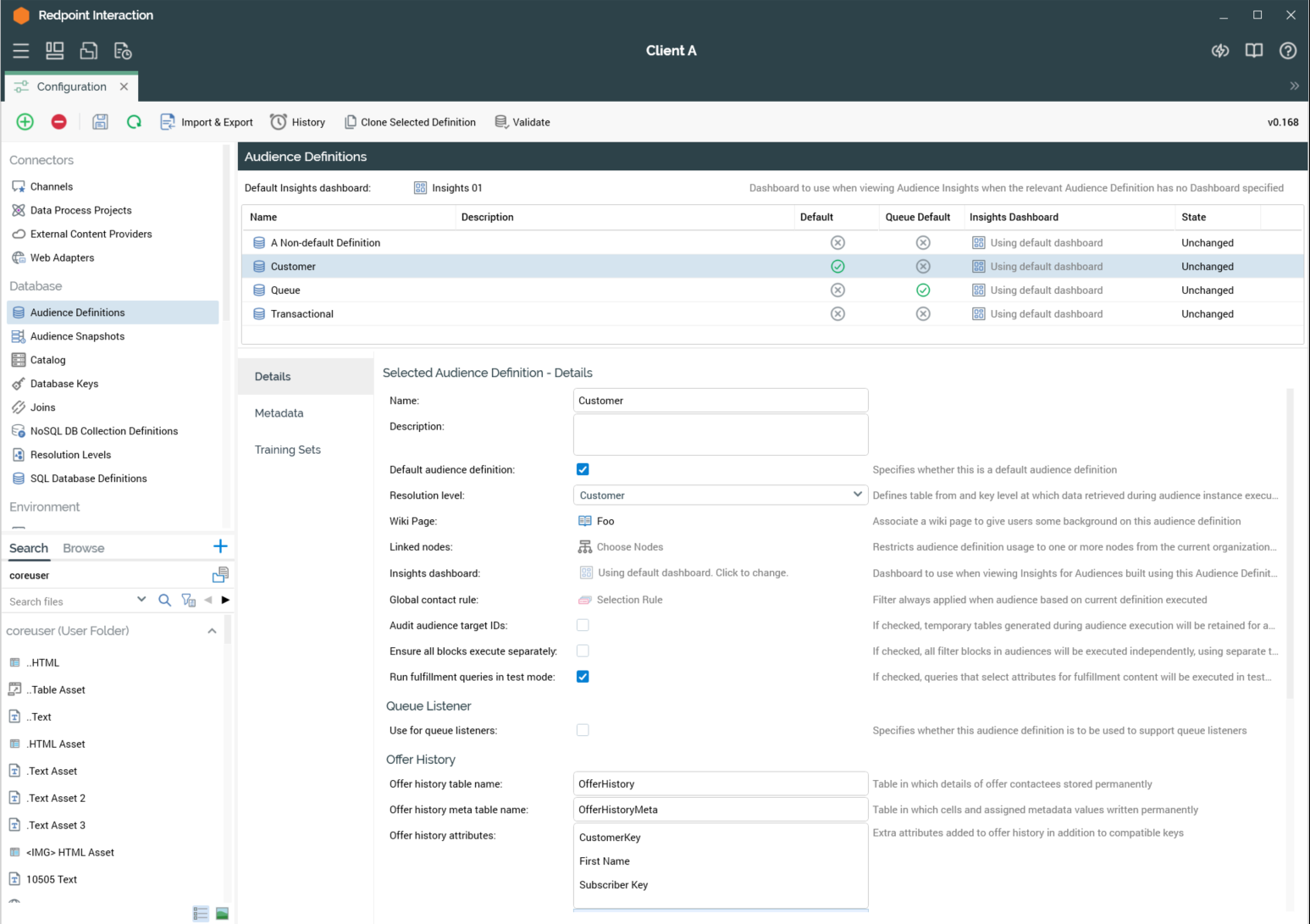
The Workbench gives you access to an array of tools to help you set up RPI to your particular requirements.
In this section:
-
Configuration workbench -
Configuring attribute lists -
Configuring audience definitions -
Configuring audience snapshots -
Configuring cached attribute lists -
Configuring the catalog -
Configuring channels -
Configuring the tenant -
Configuring Content Generation Tools -
Configuring customer views -
Configuring Data Process Projects -
Configuring Database Keys -
Configuring Execution Windows -
Configuring External Content Providers -
Configuring File Type Approval -
Configuring FTP Locations -
Configuring Joins -
Configuring NoSQL DB Collection Definitions -
Configuring NoSQL DB Offer History Definitions -
Configuring the Organization -
Configuring Queue Listener Providers -
Configuring Realtime Queue Providers -
Configuring Resolution Levels -
Configuring Seeds -
Configuring SQL Database Definitions -
Configuring State Flows -
Configuring System Configuration Settings -
Configuring User Groups -
Configuring Users -
Configuring Value Lists -
Configuring Web Adapters -
Configuring Web Publish Sites -
The Configuration Workbench and NoSQL Databases -
Appendix A – Facebook Error Codes